We need to strike a balance between encouraging new development and protecting the environment.
One of the many measures you’ll find on the November ballot is Proposition 45. It’s backers claim that its passage will make California a more affordable place to live. Of course, that sounds great. It seems like the cost of living just keeps getting higher, and we’re all getting squeezed in one way or another.
Unfortunately, Prop 45’s backers don’t actually provide any evidence that their measure will bring prices down. They say that the California Environmental Quality Act (CEQA) makes completing projects too expensive, and they say that streamlining approvals for “essential” projects will make these projects less costly, and therefore make life more affordable for Californians.
But again, the backers of the measure don’t offer any meaningful analysis to show how the cost of living will come down, and the arguments they offer are deceptive. For instance, they claim that environmental review under CEQA makes it more expensive to build apartments and causes us to pay more for housing than we should. What they don’t tell you is that over the past decade the California Legislature has passed a number of bills that either reduce environmental review for housing projects or eliminate it altogether. In recent years the City of LA has made many large housing projects completely exempt from CEQA. A 27-story residential tower at 949 S. Hope was declared exempt. So was a 6-story apartment building with 28 units at 6555 Franklin. A 23-story residential tower with 129 units at 1715 Bronson was also declared exempt from CEQA. So it’s hard to understand how Prop 45 will make housing cheaper since many housing projects aren’t even subject to environmental review. They also claim that CEQA lawsuits make it harder to build housing, but two recent studies show that only between 2% and 3% of proposed projects actually face legal challenges.
Also, Prop 45’s backers don’t talk about who pays for clean-up when a project does impact the environment. Who pays to remediate contaminated soil? To remove toxic chemicals from our drinking water? To maintain public services and infrastructure? In most cases California’s taxpayers get to foot the bill. Interesting that Prop 45’s supporters don’t mention that.
What Prop 45 actually does is take power away from ordinary citizens. The measure aggressively shortens timelines for CEQA review, giving members of the public less time to inform themselves about projects being built in their community, and less time to raise concerns. These timelines can only be extended by the project applicant, which gives developers more power over the process.
(Full disclosure: I work with a group that has voted to oppose Prop 45, but I’m writing this post as an individual, and this blog has no connection to the group.)
California is facing a growing number of environmental crises, from increasingly destructive fires, coastal erosion, warming urban areas and declining water resources. This is not the time to undermine CEQA, California’s landmark environmental law. It won’t make California more affordable. It will put California’s citizens at higher risk of increasing environmental damage.
New watering restrictions will affect public buildings.
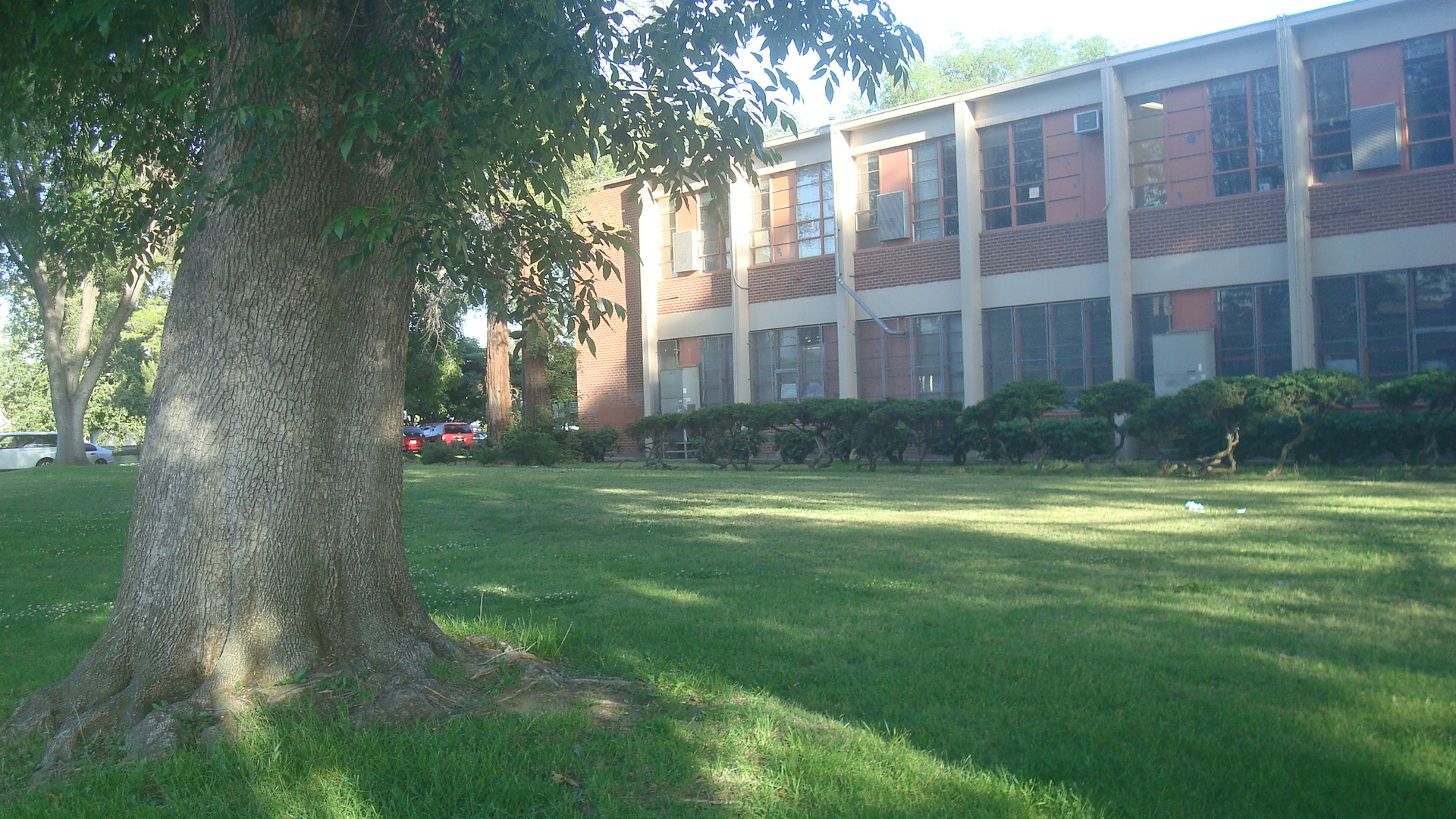
As our water resources continue to decline, we’re going to see more restrictions on water use. In 2023, the California Legislature passed AB 1572 (2023) which bans using potable water (drinking water) to irrigate non-functional turf on public properties, commercial properties and properties governed by homeowners associations (HOAs).
Non-functional turf includes: street medians and parkways; grass surrounding schools or office buildings; and grass in parking lots or HOA common areas.
But the law does NOT apply to homes and apartment buildings; properties that irrigate with recycled water; sports fields and cemeteries. It’s also still okay to water trees, and in fact, it’s important to keep watering trees, since our urban forest will play a major role in keeping urban temperatures down.
It’s likely we’ll see more restrictions in the years to come. Snowpacks in both the Sierra Nevadas and the Rocky Mountains have been declining for years, leading to reduced flows from the State Water Project and the Colorado River. While the current El Niño conditions could lead to heavy rains this winter, that would probably only offer a short reprieve.
Click on the link below to view the LADWP’s flyer with more details on the new watering restrictions. Even if you don’t live in the City of LA, your town will be adopting similar rules, if they haven’t already.
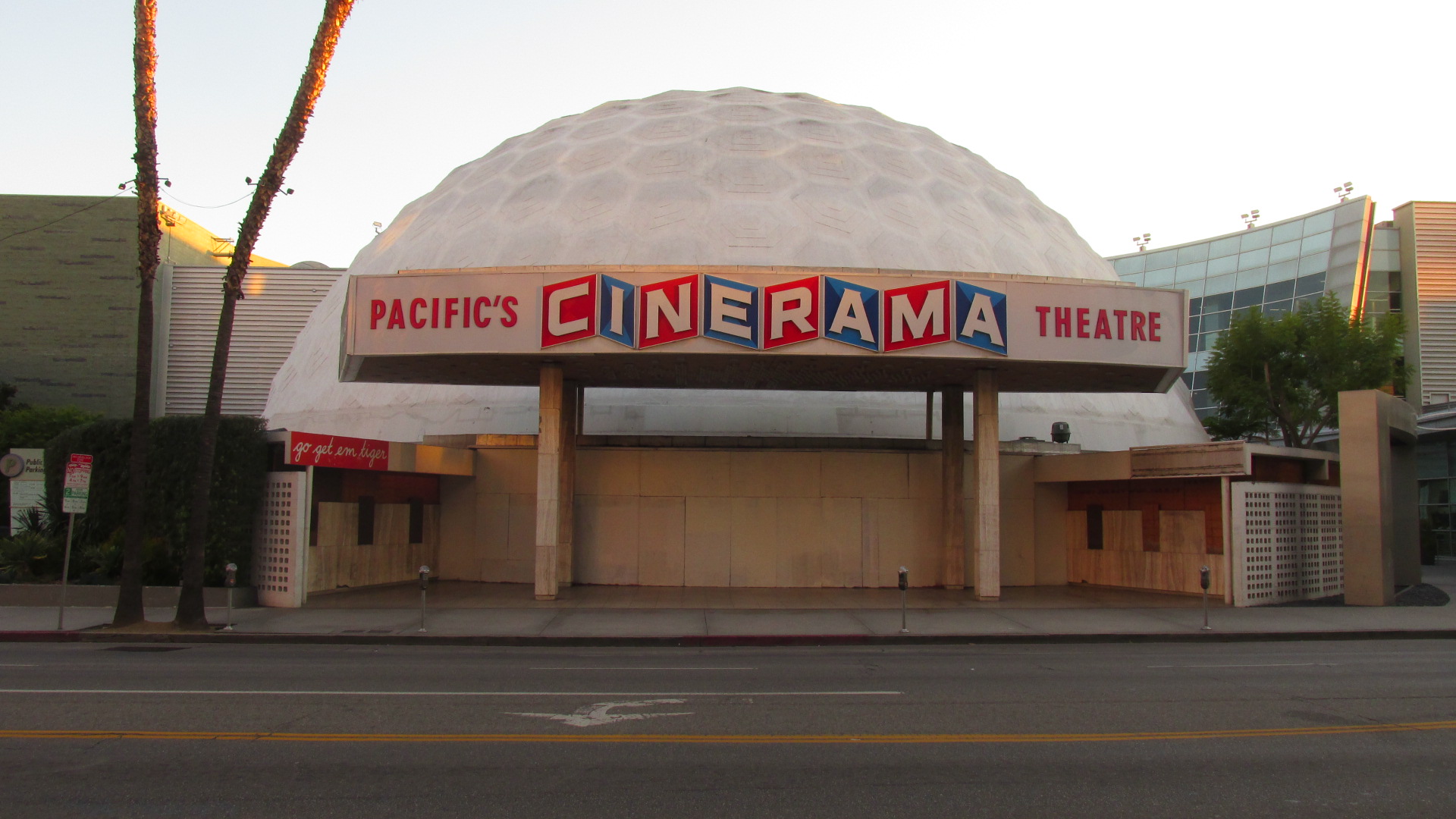
I meant to write about this over a month ago, but somehow I kept getting sidetracked. You’ve probably already heard that the Cinerama Dome will be re-opening, so this isn’t breaking news. Still, because the Dome is so important to the Hollywood community, and to me personally, I wanted to weigh in.
The Cinerama Dome/Arclight complex was closed during the pandemic. By itself, this wasn’t surprising, since movie theatres across the country were closing to prevent the spread of Covid. But the problem was that, in the Dome’s case, it appeared that the owners were not interested in continuing to operate the venue. Concerns grew when the pandemic ended and other theatres re-opened, but the Dome remained closed.
A depressing sight.
For those of you who prefer staying home and streaming movies, this probably doesn’t seem like a big deal. But to the Hollywood community, it was huge. Opening in 1963, the Dome was built to show films made in Cinerama, a wide-screen process that was designed to create an immersive experience. It was one of many wide-screen processes developed on the 50s to lure audiences away from their TVs. (For more background, click here.) In 2002, Pacific added the Arclight complex, a multiplex that included a restaurant and bar. In addition to showing first-run films, the Arclight also screened classic films and hosted events. At the Dome/Arclight complex, seating was assigned, the number of previews was limited to three, and cell phone use was restricted. The high standards for projection and sound, coupled with the overall quality of the experience, made the Dome/Arclight complex a hit. It wasn’t just a place to see movies. It was a social center for the Hollywood community.
As we all know, Hollywood has been hit with a lot of bad news lately. So the news that the Dome/Arclight will be re-opening, along with this year’s strong rebound in box office receipts, is a welcome change of pace. The complex will be run by Alamo Drafthouse, a subsidiary of Sony Pictures. Sony says they’ll be restoring the Dome, and plan to re-open in 2028.
Angelenos of all ages thronged to the LA Central Library on Saturday to celebrate its 100th birthday. The program lasted all day long and there were lots of free events and activities, including crafts for kids, readings, tours of the library and live music.
The courtyard was crowded with visitors.A balloon arch decorated the west entrance.
The courtyard at the west entrance was crowded when I showed up at around 10:30 am. I was glad to see the event attract so many visitors. With literacy rates in the US declining, I worry that people are reading less, and that they don’t value libraries as much as in the past. But the thousands of children, teens, parents and seniors who attended seemed excited about being there. Library staff had to turn people away from some events because reservations had already maxed out.
Attendees filled the corridors.
While we tend to think of libraries as buildings stuffed with books, the LA Public Library has so much more to offer. LAPL holds 6.2 million items in all sorts of formats, including audio books, CDs and DVDs. Its branches offer an internet connection for people who can’t connect at home, and a quiet place for students to study after school hours. There’s storytelling for children and tutoring for adults. LAPL even offers yoga, tai chi and zumba classes.
The LA Public Library has a rich history. Its precursor, the Los Angeles Library Association, had its beginnings in 1872. Over the past 150 years the system has grown to serve the whole city, with branches in 72 neighborhoods. The Central Library, located at 630 West Fifth Street, had its dedication ceremony in 1926. It was badly damaged during a major fire in 1986, causing the loss of over a million books and a closure that lasted seven years. It reopened in 1993, and has continued to serve the community since then.
The world’s largest pop-up book.
For me the highlight of the day was the world’s largest pop-up book, Luceros y Penumbras. I wanted to get a photo, but it took a while because there were so many people crowded around. The book was created by LA-based artist and printmaker Daniel González. The web page at the Library Foundation says, “When opened, the book measures approximately 31 feet by 20 feet, with pop-ups rising more than 11 feet tall. Weighing over 1,800 pounds, it is made entirely from the same materials used to produce traditional books, including paper, adhesive, and fabric.”
If you missed the centennial celebration, don’t worry. There’s still plenty to see and do at the LA Central Library. If you’ve never been there, check it out.
A photo of Hoover Dam from 2018. The white areas above the water’s surface show how far the level had dropped even back then.
The news about the Colorado River just keeps getting worse. We’ve know for years that flows have been declining. Now snowpack in the Rocky Mountains has gotten so low it appears that the Colorado River’s source is drying up.
This is really bad news for Southern California, both for urban water users and for farmers. About one fourth of the water used by urban households in Southern California comes from the Colorado River, and the River supplies pretty much all of the water used for farming in the Imperial Valley.
The outlook is especially bad for the City of LA. Much of our relatively small groundwater resources have become unusable due to industrial contamination. As for the LA Aqueduct, deliveries have been declining over the last few decades to reduce environmental damage in the Eastern Sierras, where the aqueduct originates. And even deliveries from the State Water Project have become less reliable.
There are seven states that rely on water from the Colorado River, and they’re divided into two groups:
Upper Basin States: Colorado, Wyoming, Utah, New Mexico
Lower Basin States: California, Nevada, Arizona
These two groups have been arguing for years over how to reduce their consumption, and have not yet reached an agreement. It looks increasingly likely that the Federal government will intervene, imposing restrictions in order to maintain water levels at Hoover and Glen Canyon dams. If the levels continue to fall, it could mean the dams will no longer be able to generate hydropower.
As all of LA’s water resources continue to decline, we can expect to pay higher prices for water, even as mandatory restrictions reduce our water use. There’s no easy fix. Much of the LA area’s growth was made possible by importing water from hundreds of miles away. Growth advocates did not foresee a future where snowpacks in the Sierras and the Rockies would decline substantially over decades. This is a structural problem that we currently have no solution for.
This story in the LA Times has more details on the impacts of a shrinking Colorado River.
We all know that tech companies and on-line services are collecting our data. In an e-mail to a friend you mention an upcoming vacation and suddenly every site you visit has ads for airlines. You order a product from an on-line vendor, and all of a sudden you see a barrage of ads for the same product from a different company. When I talk about this issue with people I generally get one of two reactions. The response is usually either…
“They already have all my data, so there’s no point in worrying about it.”
…or the person says…
“I haven’t done anything wrong, so I have nothing to hide.”
In both cases, the response shows that the person doesn’t know the real extent of the data being collected or the real risks involved. You may be the most law-abiding citizen in the world and scrupulously honest in all your business dealings, but if a company you do business with is subject to a data breach, it could expose all sorts of sensitive data, including passwords, credit card numbers, bank account info and even Social Security numbers. Just this month a trove of data containing 24 billion records was exposed. Also, you’re probably not even aware of the extent of the data that you’re sharing through on-line services and electronic communications. Have you suffered serious health issues? Do you discuss politics on-line? Do you interact with your church, synagogue or mosque on-line? How would you feel if a prospective employer had access to this information? How would you feel if an extremist group could view your data in these areas?
And now the California Legislature is moving toward removing one of the few remaining privacy protections we have. Current California law prohibits wiretapping, eavesdropping on, or recording confidential communications. But SB 690 would grant an exemption for any “commercial business purpose.” Just think about that for a moment. Like I said at the beginning of this post, you know Google scans your e-mails and uses the info to place ads. You know that web sites will grab your mobile ID to send you special offers. But allowing companies to intercept all of our electronic communications for any “commercial business purpose” opens up a whole world of disturbing possibilities. Have you talked to your therapist about bouts of depression? A pharmaceutical company could listen in with the goal of selling you drugs. Did you send an e-mail to your boss outlining a great idea for a new product? A rival company could read that e-mail and race to patent that product before you do. Is your teen sending texts to a friend about their fears and anxieties? A tech start-up could offer to set them up with a companion chatbot that would encourage them to share their deepest secrets and promise to be their best friend forever. For a small monthly sum.
All of this would be completely legal, because all of it falls into the category of a “commercial business purpose”.
Backers of SB 690 say the goal is to stop a spate of predatory lawsuits that have targeted on-line businesses that collect user data. This is certainly a concern, but this bill is not the right fix. It would be fairly easy to write a bill that allows businesses to collect certain categories of data from people who visit their web sites. As currently written, SB 690 erases privacy protections for ALL electronic communication. Your phone calls, e-mails, chats and texts would all be fair game. A company could secretly monitor your communications and use the info they gather for any “commercial business purpose”. Supporters also say that Californians don’t have to worry because they’re still covered by the California Consumer Privacy Act (CCPA). This is completely false. Under the CCPA, you have to do the work of monitoring personal information held by data brokers and you have to make a request for them to delete data. The CCPA does not protect your on-line communications.
It’s not surprising that business groups are lining up to support SB 690. What’s interesting is that, at first glance, the analysis done last year for the State Senate seems to include very few tech companies in the list of supporters. This is surprising because the biggest beneficiaries would be the Big Tech firms. Companies like Amazon, Google and Meta already have millions of customers who use their services regularly, if not every day. Technically, California law currently prevents them from reading, monitoring, collecting your communications with family, friends, doctors, religious counselors, business associates and others. But if SB 690 is approved, they can read anything you write, listen in on any conversation, and monitor any video conference you participate in. As long as they claim it’s for a “commercial business purpose”, all of those things are fair game.
But if you look closely, you’ll see two entities included on the list of supporters: TechNet and Silicon Valley Leadership Group. The first is a national organization that claims to “educate” government leaders about the tech industry at the federal and state levels. The second is a business association that says it represents the “innovation economy”. And guess what. Not only do Amazon, Google and Meta belong to both organizations, but so do Airbnb, Apple, Cisco and Tesla. Beyond that, each organization lists many more tech companies among their members.
So yes, the Big Tech companies are solidly behind SB 690, even though they seem to be shy about directly adding their company names to the list of supporters. Why wouldn’t they want to be up front about showing their support? Could it be they’re afraid that directly connecting their companies to this bill would make it seem like a huge power grab? Could it be they’re worried that putting their names on the list would make it clear that their goal is to erase privacy protections in California? It’s no secret that many leaders of Big Tech firms don’t like any kind of regulation. Tech lobbyists are working hard in Sacramento and Washington to stop legislation that could impact tech companies. And now the tech industry is pouring tens of millions of dollars info Super PACs to influence the upcoming elections. They want to support politicians who will push their deregulation agenda.
SB 690 is completely in line with this push to get rid of regulation. It seems to me that Big Tech wants to take away your right to privacy so they can make even greater profits.
SB 690 has already been approved by the State Senate. It’s now moving through the State Assembly. If you’d like to share your views on this bill, you can find the contact info for your Assembly representative by clicking on the link below.
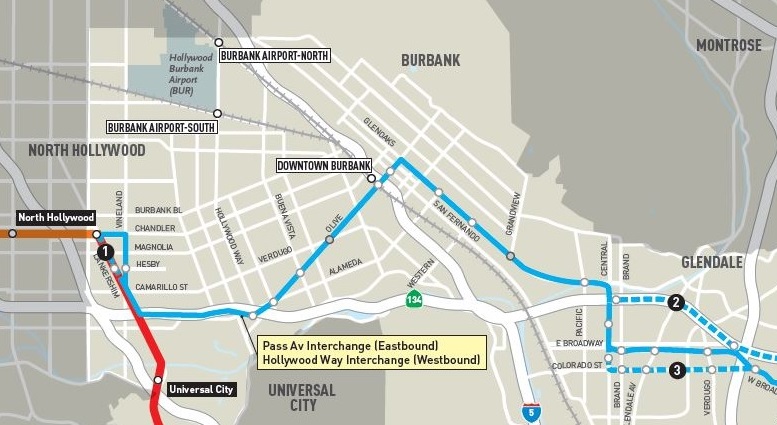
Partial map of Metro’s proposed North Hollywood to Pasadena Bus Rapid Transit line.
The years-long struggle over a proposed bus lane on Olive Avenue in Burbank has escalated even further. In May the Los Angeles County Metropolitan Transportation Authority (Metro) filed a lawsuit against the City of Burbank. Metro claims that the city is illegally withholding permits for the project. The city says that the permits may need further environmental review due to potential upzoning that could occur as a result of implementing the bus lane.
The dedicated bus lane would become a part of Metro’s North Hollywood to Pasadena Bus Rapid Transit (BRT) project that will run between North Hollywood and Pasadena. When the project was first proposed, many Burbank residents objected on the grounds that removing a lane currently used by cars could further exacerbate congestion. There are also new concerns since the passage of SB 79, a State law that allows for significant upzoning of parcels in close proximity to some transit lines.
A statement posted on the City of Burbank’s web site says….
The City supports the BRT and is participating in its planning, environmental review, and design stages. During the Project’s environmental review, the City Council requested mixed-flow on one BRT segment along Olive Avenue between Buena Vista and Lake Streets due to concerns about intersection congestion and related spillover traffic impacts into adjoining residential neighborhoods. Since 2022, the City has continued to collaborate with Metro to deliver the BRT Project, while continuing to assert the Council’s Olive Avenue mixed-flow position.
You can learn more about the city’s position by going to their web site.
Marathon Oil Refinery in Wilmington where a fire broke out in 2020. While no one was injured, it took over a day to put out the fire.
Over the past decade, it’s become popular to bash the California Environmental Quality Act (CEQA). First it was claimed that CEQA was a major reason for the lack of affordable housing in California, but a study by the Rose Foundation found that only 2% of approved projects faced CEQA lawsuits. Then lawmakers in Sacramento began claiming that CEQA was holding back all kinds of projects, not just housing. The result was State Senator Scott Wiener’s SB 131, which made a vaguely defined category of “advanced manufacturing projects” exempt from environmental review. As I wrote earlier, this category could include a number of projects that produce toxic waste, including the production of organic fertilizer, semiconductors and lithium ion batteries. There was heavy opposition to this bill from environmental groups, but Gov. Gavin Newsom strongarmed the legislature into approving it.
Now the California Chamber of Commerce has proposed a ballot measure that would substantially rewrite CEQA, making major changes to accelerate the approval of “essential” projects. The measure is called the Building an Affordable California Act (BACA), and they’ve already gathered enough signatures to put it on the November 2026 ballot. As you may have guessed by the title, the Chamber is arguing that CEQA makes the approval of projects too time-consuming and costly, and that Californians are paying more for housing, water and electricity as a result. While the Chamber’s web site features commentary by CEO Jennifer Barrera citing six projects that have been delayed by CEQA, I couldn’t find any actual research or data on their site to support their assertion that CEQA has played a significant role in raising the cost of living for Californians. The Chamber makes a point of saying that BACA would still leave Federal environmental laws in place, but they don’t mention that the Trump administration has been aggressively pushing to roll back enforcement of those laws and to rewrite environmental regulations. And while the Chamber makes unsubstantiated claims about higher costs for housing and utilities, they don’t talk about the huge cost of cleaning up toxic sites. Some readers may remember the Stringfellow Acid Pits, a toxic waste dump that leaked contaminants into the surrounding communities. Tens of millions of your tax dollars have already gone into cleaning up this site, and the job isn’t over.
An analysis on Legal Planet says that BACA would create a new CEQA process for “essential” projects, laying out shorter timeframes for environmental review. It could also limit the kind of environmental impacts that the project applicant would be required to analyze. Legal Planet’s post gives a list of projects that would likely qualify for streamlined review under BACA, including freeways, dams, and possibly data centers. And since the Chamber talks about speeding up energy projects, my guess is that nuclear reactors would also probably qualify for the shorter review process.
But all these people who keep telling us how bad CEQA is don’t often talk about the good things CEQA does. A community in Fontana filed a CEQA lawsuit over the approval of a logistics center that would have brought a huge increase in diesel truck traffic and made the area’s poor air quality even worse. They achieved a settlement requiring the project proponent to take concrete steps to reduce air pollution. In 2018 the City of Arvin approved a permit allowing an oil company to drill four wells in a residential community. Residents filed a CEQA lawsuit and stopped the drilling. Think for a moment about how you’d react if a company wanted to build a large logistics center or start drilling oil wells in your neighborhood. Would you consider filing a lawsuit to protect the environment you live in?
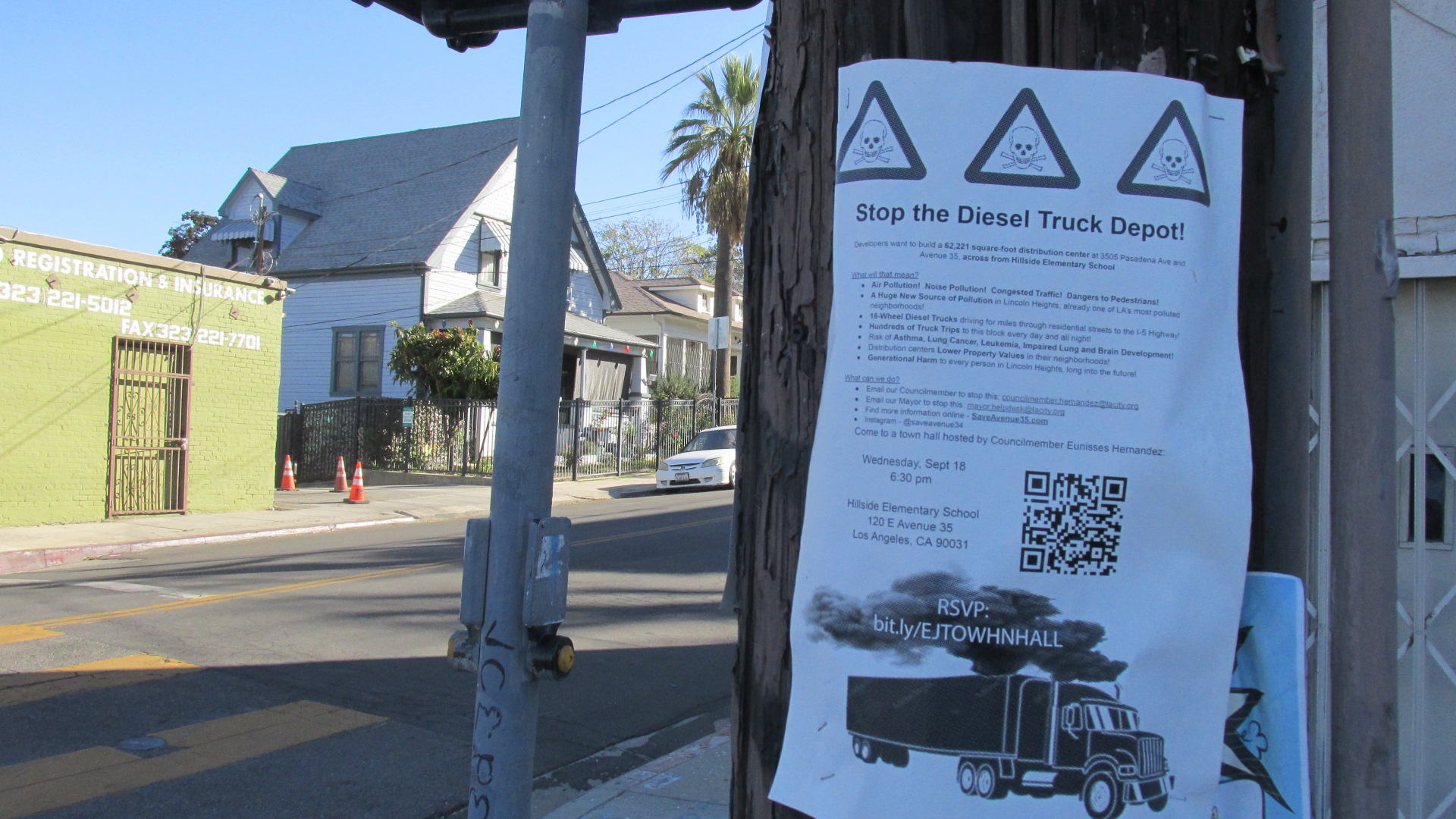
Residents have been fighting to stop a proposed 56,000 sq. ft. distribution center which would sit within 300 feet of Hillside Elementary in Lincoln Heights.
Now the crisis at the GKN Aerospace facility in Garden Grove has brought new attention to how environmental hazards can impact nearby communities. When the temperature of a chemical storage tank began to rise unexpectedly, fears that the tank might explode led to the evacuation of an estimated 50,000 people in the area. While a catastrophe was averted, it was a stark reminder of the dangers that can arise from planning decisions that put residential buildings near industrial uses. In a story related to the GKN Aerospace situation, the Daily News reported that nearly two million Californians live within a three-mile radius of a facility that uses the same chemical that caused the crisis in Garden Grove. The LA Times also followed up with a story examining the risks involved in rolling back environmental regulations. In that story, the authors reminded readers of other recent events: the damage done to surrounding communities by lead contaminants from the Exide battery plant in Vernon; the risks to students at Jordan High School due to toxic waste from S&W Atlas Iron & Metal in Watts; the rupture of an oil line in East LA that sent over 2,000 gallons of crude into the LA River; the recent fire at tire recycling center in South Gate. The Times story also points out that the push to build more housing quickly has led to the approval of projects in areas at high risk of fire.
The point here is that while Gavin Newsom and Scott Wiener and the folks at the California Chamber go around bashing CEQA, they don’t talk about the risks we face when we cut corners on environmental review. And, as the situation in Garden Grove showed, there are very real risks to public health and safety when we don’t properly examine a project’s impacts on communities. Aside from a frightening crisis like a chemical tank overheating to the point where it could explode, there are less dramatic but still very real threats to the air we breathe and the water we drink. If we don’t examine potential problems when we build chemical plants, or data centers, or logistics hubs, we will end up creating more risks to our health and safety.
Fortunately, people are pushing back against the California Chamber’s efforts to undermine CEQA. Led by the Planning & Conservation League, scores of public health and environmental groups have come together to fight BACA. They’ve created a web site where you can learn about their efforts and find out how to join if you want to get involved.
Bottom line, CEQA is about giving people a voice about what gets built in their community. It gives you a chance to inform yourself about a project’s impacts, and to speak about your concerns. Elected officials like Scott Wiener and Gavin Newsom have been working hard to take power away from communities and to give it to corporations. The California Chamber’s measure is another aggressive attempt to silence Californians who care about their communities.
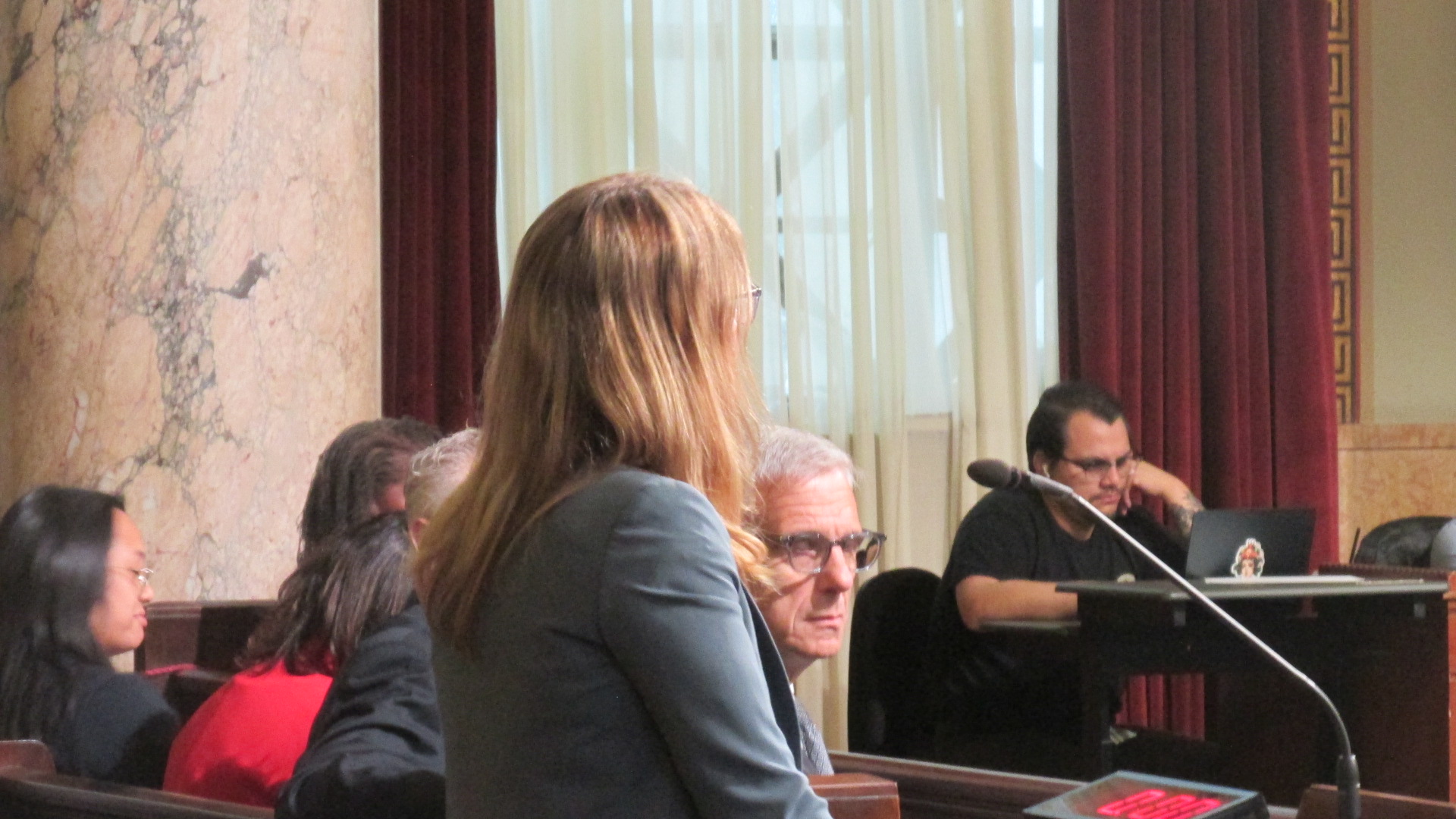
Ad Hoc Olympics Committee Meeting at LA City Hall on April 14, 2026.
There’s been a growing sense of frustration at LA City Hall over the lack of concrete information the City Council is getting from the Olympic Organizing Committee, LA28. At the last meeting of the City’s Ad Hoc Olympics Committee in January, Councilmember Monica Rodriguez made it clear that she was not happy about LA28’s refusal to turn over detailed information about financial issues. At today’s meeting of the Ad Hoc Committee, almost every one of the members present aired their complaints about the way things were unfolding. I wouldn’t say the anger was boiling over, but it seemed to be seething beneath the surface.
Stephanie Richard of Loyola Law School at the microphone, and LA28 CEO Reynold Hoover in background.
And it wasn’t just the councilmembers who were frustrated. A group from the Sunita Jain Anti-Trafficking Initiative at Loyola Law School showed up to speak about their frustration with LA28’s Human Rights Strategy for the Games. They had been asking for months to see the document, and now that it’s finally been made available they shared a number of criticisms. Human trafficking is closely associated with major sporting events, with construction and hospitality being the two sectors where it’s most common. Businesses often hire undocumented workers to cut costs, and in many cases the workers are subjected to awful conditions, which they’re not likely to complain about because they’re undocumented. The group from Loyola had submitted their own report last year, but apparently LA28 ignored many of their recommendations. Speakers cited the fact that LA28’s plan included no funding for non-profits that address human trafficking, and complained that the plan emphasized law enforcement rather than assistance for victims. Another concern is that the Federal government will be in charge of security for the event. Since the Olympics will undoubtedly bring a surge of undocumented workers, there are fears that ICE will play a large role. It would be very convenient for businesses that hire undocumented workers to have their employees whisked off to detention centers when the Games are over. No need to cut a final paycheck for those folks.
Councilmember Monica Rodriguez talks about her frustration with LA28’s procurement plan.
But the Council’s focus today was the lack of detail in LA28’s procurement plan. Obviously, one of the benefits of hosting the Olympics is that local businesses will get contracts tied to the Games. But what qualifies as “local” was a point of contention. The members of the Council had counted on businesses located in the City of LA to be the primary beneficiaries, but LA28’s procurement plan allows almost any business in Southern California to get a contract. This was not acceptable to the Council, since revenue for businesses also translates into tax dollars which the City badly needs. LA28 CEO Reynold Hoover told the committee that, all things being equal, LA28 would favor businesses in the City of LA. But as Councilmember Hugo Soto Martinez pointed out, there are naturally going to be huge differences in bids from businesses located in the City of LA as opposed to businesses located in more remote areas. Salaries, rent and taxes are all going to be higher in the City of LA than in cities on the periphery of the county. Businesses in the City of LA will naturally charge more than businesses in outlying areas. If they have to compete with businesses all over Southern California, they’ll likely lose out on the basis of cost. The members of the Council tried to get LA28 to narrow the focus for the procurement plan. Hoover did not say no, but he wouldn’t say yes.
Hoover is a retired Lieutenant General who’s also served in civilian roles at FEMA and the CIA. He started his remarks today by reading a lengthy opening statement where he talked about how great the Olympics were going to be. It was all worthless marketing-speak. My guess is that he knew the committee members were angry and he was trying to set a positive tone. It didn’t work. The frustration of the committee members was palpable. They’re not buying it.
I heard that thousands of people showed up for the “No Kings” protest in Downtown LA yesterday, but since I’ve been to a number of the gatherings at LA City Hall, I decided to check out some of the smaller local events. The No Kings organizers reported record turnout across the nation, and while you always have to be skeptical about the numbers given by organizers, it does seem like an increasing number of people are angry and frustrated about the direction the country is going in. The war in Iran, ongoing ICE raids and rising prices seem to be at the top of the list of grievances.
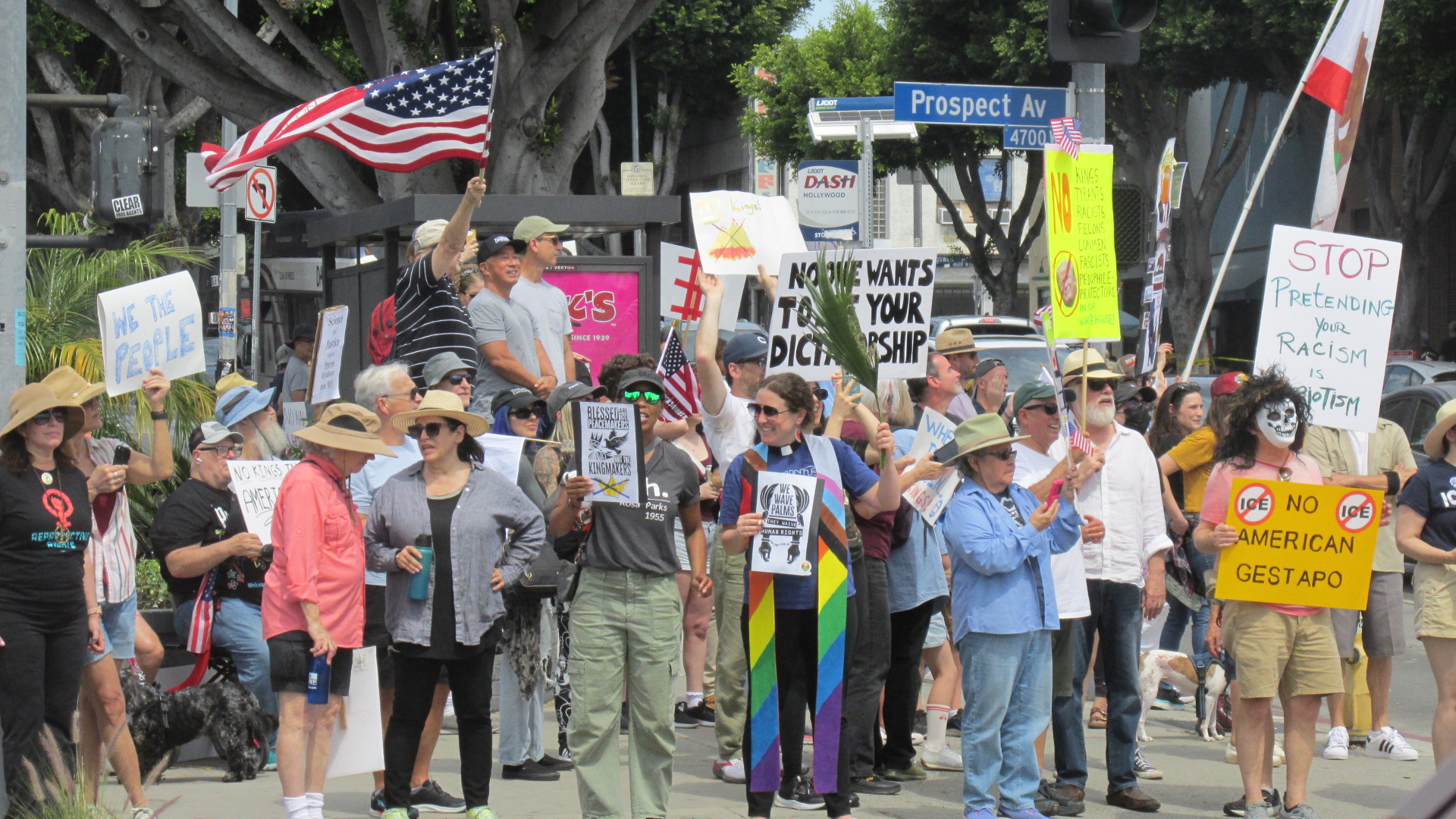
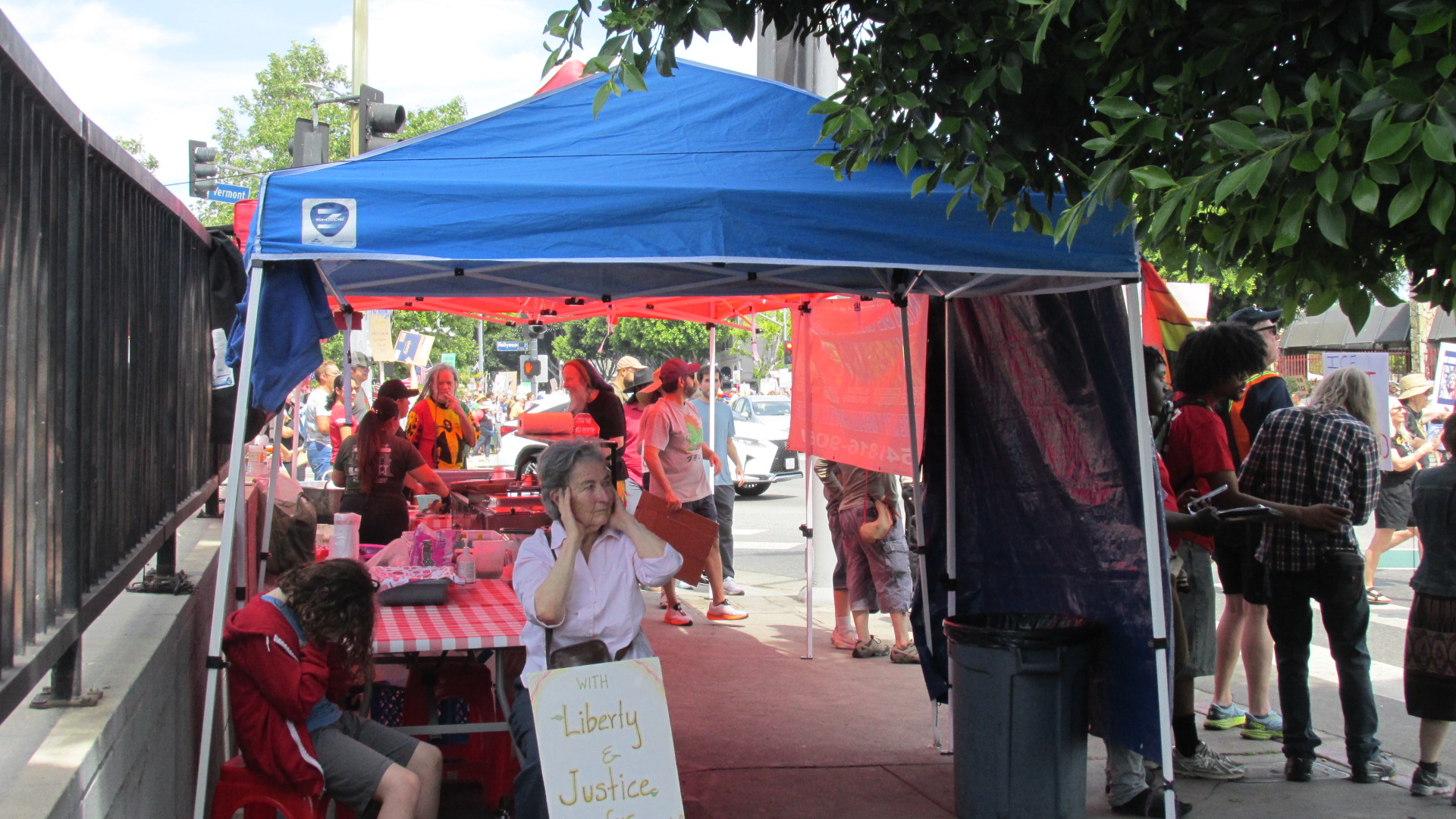
I first went to the protest at Hollywood and Vermont, where it looked like several hundred people showed up. Signs urged passing drivers to honk in support, and lots of drivers responded. I saw one older woman sitting with her hands over her ears. It was pretty loud.
The signs at the Hollywood protest covered a lot of issues.Protesters marched back and forth across the intersection.One woman sat with her hands over her ears. It was pretty loud.
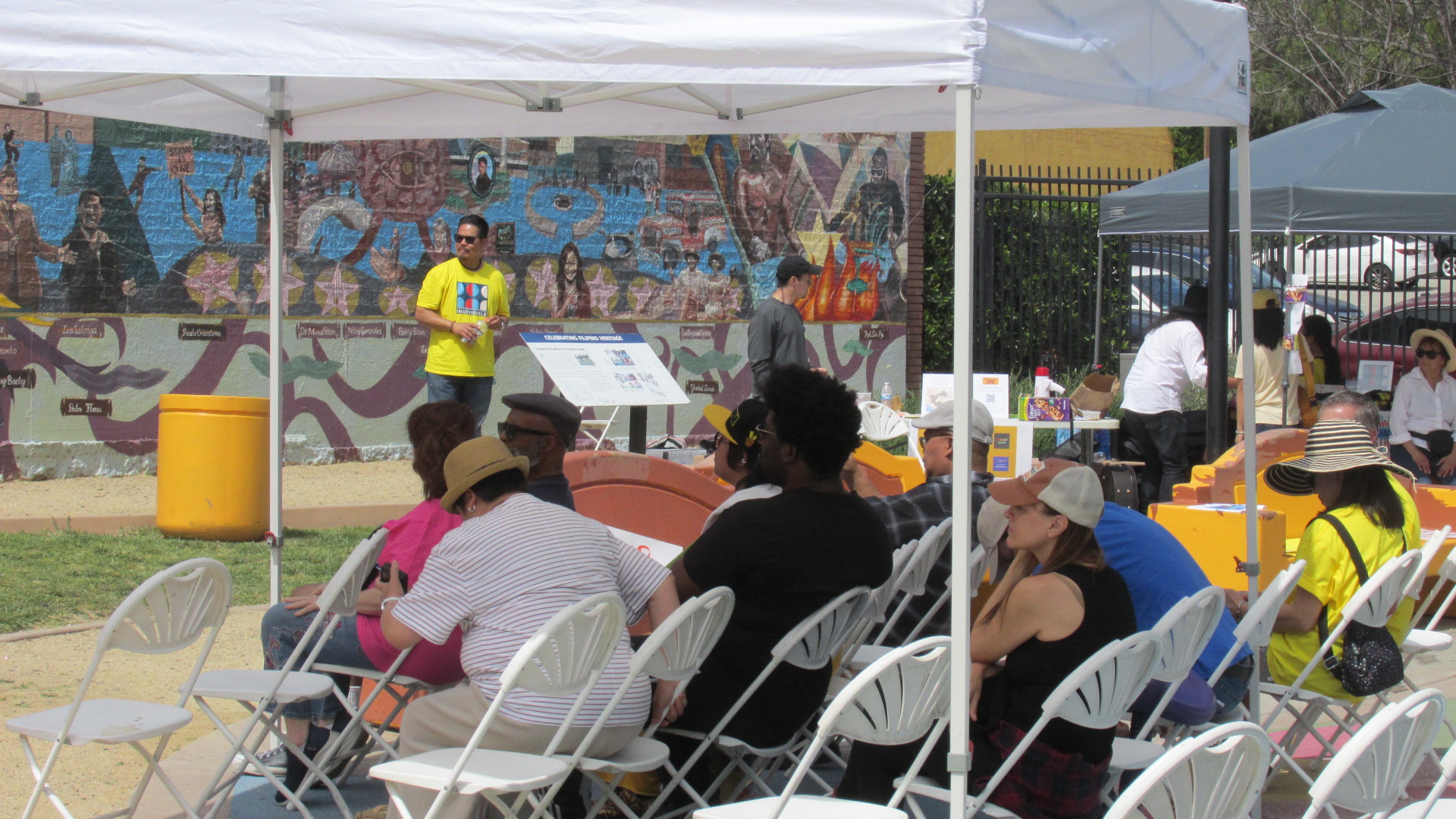
Then I went to small rally held in Unidad Park on Beverly in Filipinotown. I’d say between 50 and 100 people showed up to listen to speeches and music. A number of groups had tables set up where volunteers were engaging attendees on various issues. And some kids were having a great time on the swings.
Attendees gathering in front of the stage at Unidad Park in Historic Filipinotown.
Canopies were set up to shield attendees from the sun.A couple of kids were having a great time on the swings.
While I didn’t go to the main event at LA City Hall, I did pass through Downtown as I got off the bus to get on the train, and I ran into this group of teachers marching up Grand Avenue. They are not happy about what the current administration is doing to education. I assume they were heading to City Hall to join the crowd at Grand Park.
Teachers marching up Grand Ave. in Downtown LA.The march was well organized and the teachers shouted out slogans as they headed north on Grand.
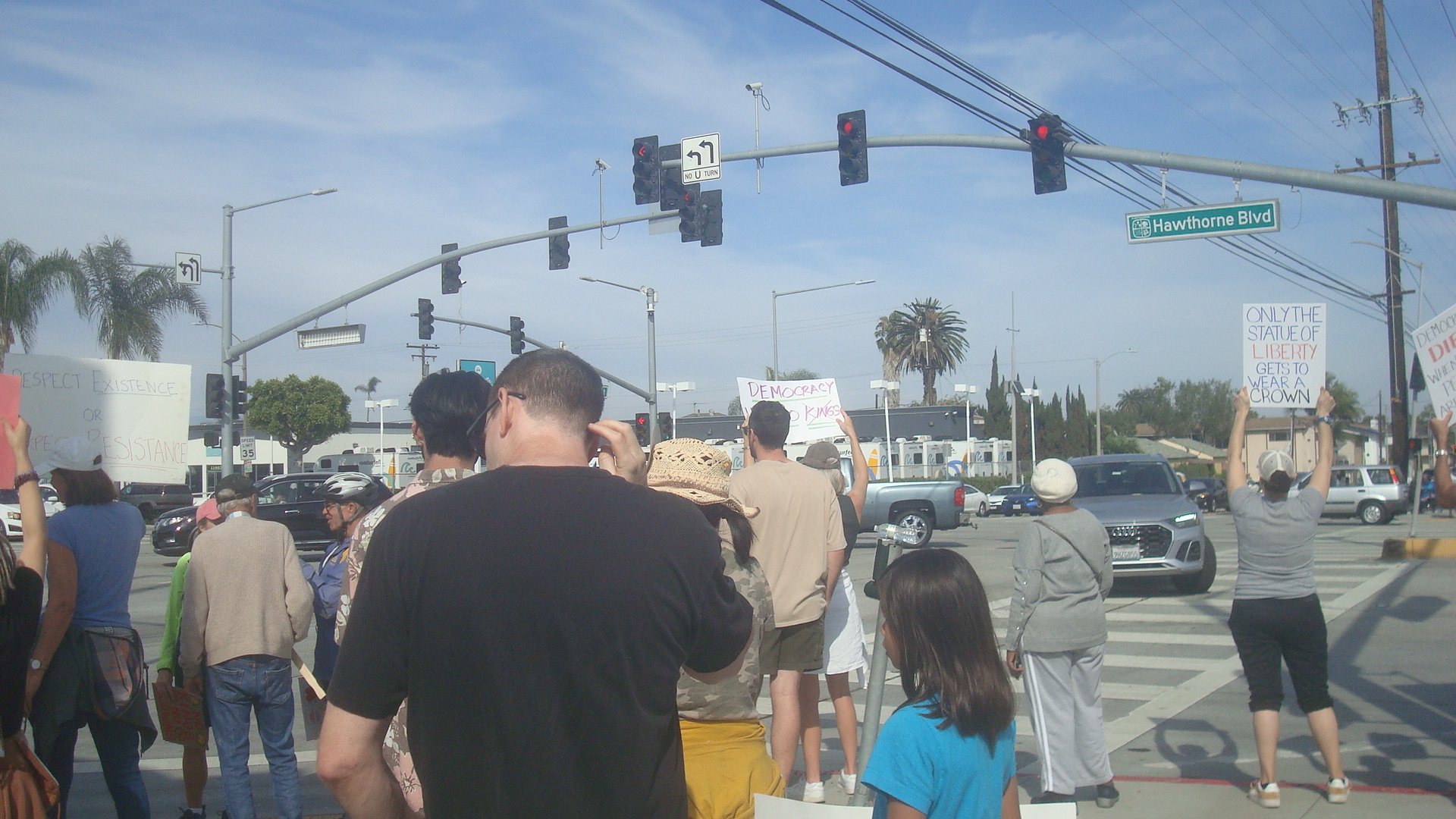
Then I headed down to Hawthorne, where a small but spirited group of protesters gathered at Hawthorne Blvd. And 120th. Attendees stood with signs and flags, marching back and forth across the intersection. They also got some appreciative honks from passing drivers.
Protesters gathered at Hawthorne Blvd. and 120th.
The crowd urged passing drivers to honk in support.
As the lights changed, protesters walked back and forth across the intersection.
I don’t see these protests going away. It seems like there’s growing frustration with the way things are in the US right now. It will be interesting to see what happens in the mid-term elections.